- Markets
- Products
- Services
- News
- Tools & Resources
- About Nexans
- Search
- Contact us
- Compare
- Sign in




Innovative technologies to support very high power data centres
Next-generation solutions for next-generation data centres
Hyperscale and gigawatt-scale data centers are emerging to meet soaring compute demands, especially driven by AI, cloud services and advanced analytics. As their footprint and power consumption increase, significant challenges arise driven by complex power architectures, rising energy density, thermal inefficiencies and increasing sustainability pressures.
These bottlenecks translate into higher costs, longer timelines, and reduced flexibility in terms of project planning and operations. Next generation facilities are pushing the limits of traditional electrical infrastructure, both inside and outside the data center footprint.
Nexans develops the breakthrough technologies that reduce those costs to their physical minimum — and ensure safety at every level.
of an hyperscale data center operating expenses come from electricity
less copper used in superconductivity cables
energy losses and heat emissions
High-temperature superconducting cables
High-temperature Superconducting (HTS) cables offer a compelling solution that can radically simplify power infrastructure, reduce costs while unlocking a step change in how data centres transmit and distribute power and redefining the overall infrastructure design.
More about Nexans superconducting solutions:
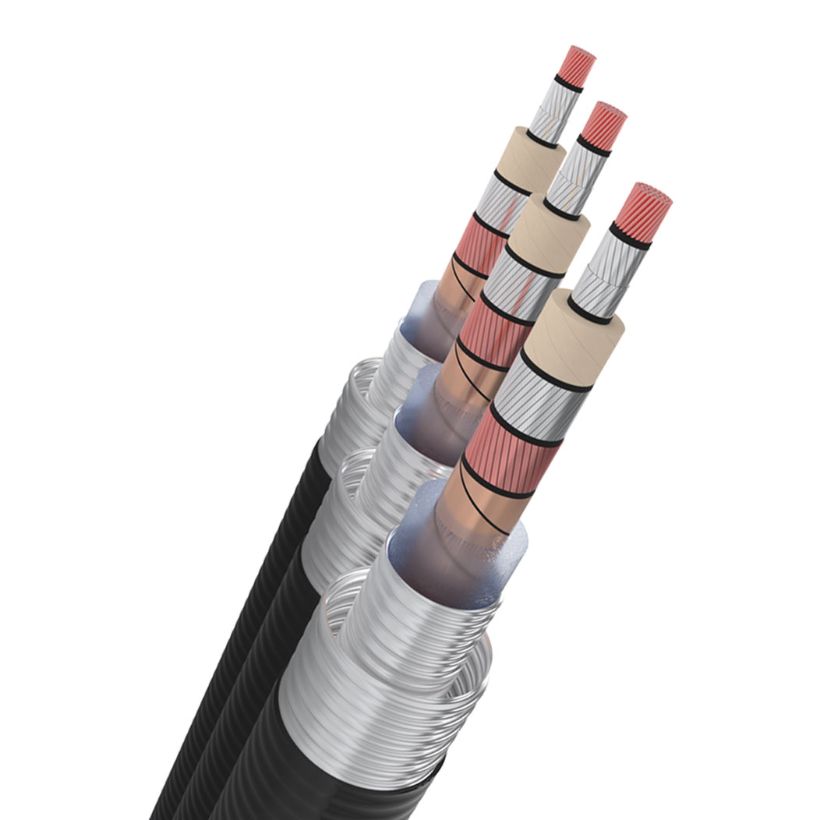
- Ultra-high and efficient current capacity: ultra-efficient conductors allowing maximum power transmission capacity, up to 3.2 GW, with zero or near-zero electrical losses, enable power savings greater than the energy expanded to maintain conductors at a low temperature.
- Reduced environmental footprint: with 97% less copper used, no EMF (Electrical Magnetic Field) and only 1/10th of the land required vs conventional cables, superconducting cables generate less heat, reducing the need for extensive cooling infrastructure inside the data halls.
- Compact design: HTS cables are up to 10 times narrower than conventional ones. Fewer cables are required and there is no need for space between phases. Superconducting cables require less space with more efficient distribution layouts, and thus, a minimized impact of civil engineering, contributing to lower costs during the construction phase.
Direct Current systems
AI driven workloads are reshaping data center electrical architectures, as high density AI and HPC racks concentrate unprecedented power levels within small footprints, with fast load variations and strict requirements on power quality and availability. Legacy AC distribution, designed for lower and predictable loads, is no longer adapted. As rack power densities move beyond 100 kW—typical of next generation AI racks—traditional 48–54 VDC distribution architectures reach their practical limits. Since all IT equipment fundamentally operates on Direct Current, rising rack power levels make multiple AC/DC conversion stages increasingly inefficient.
800 VDC architectures therefore becomes a necessity, introducing a structural shift: power is distributed directly from a shared DC backbone to IT equipment, eliminating successive conversions embedded in UPSs, PDUs and server power supplies
DC architectures also align naturally with modern energy systems, as Battery Energy Storage Systems and photovoltaic sources generate DC power, enabling faster load response, improved resilience and lower carbon, scalable data center designs. In this context, DC cables become core infrastructure, ensuring safe and reliable power delivery under continuous DC voltage and thermal stress.
Nexans DC Series cables, validated in real life environments such as the Shift2DC demonstrator in Stuttgart, are engineered for long term DC ageing and interoperability, with Nexans also contributing to DC standards through the Current OS Foundation.

Combining superconductivity and 800 VDC
Considering the growing trend in modern electrical infrastructure to move towards Direct Current (DC) transmission and distribution, particularly in environments where energy efficiency and power quality are paramount, combining High-Temperature Superconducting (HTS) systems with DC systems, offers a strategic advantage.
When paired with DC systems, HTS cables can deliver electricity with zero electrical loss, enabling a new standard of efficiency and performance.
Key advantages of HTS in DC applications include:
- Loss-free transmission across high voltage (HV), medium voltage (MV), and low voltage (LV) networks.
- Reduced energy consumption, improving sustainability and lowering operating costs.
- Smaller footprint, enabling compact installations in constrained spaces.
Our websites
Select your country to find our products and solutions
-
Africa
- Africa
- Ghana
- Ivory Coast
- Morocco
- North West Africa
- Americas
- Asia
- Europe
- Oceania