- Markets
- Products
- Services
- News
- Tools & Resources
- About Nexans
- Search
- Contact us
- Compare
- Sign in





Superconductivity
Superconductivity: Redefining Energy Infrastructure
Jun 26, 2026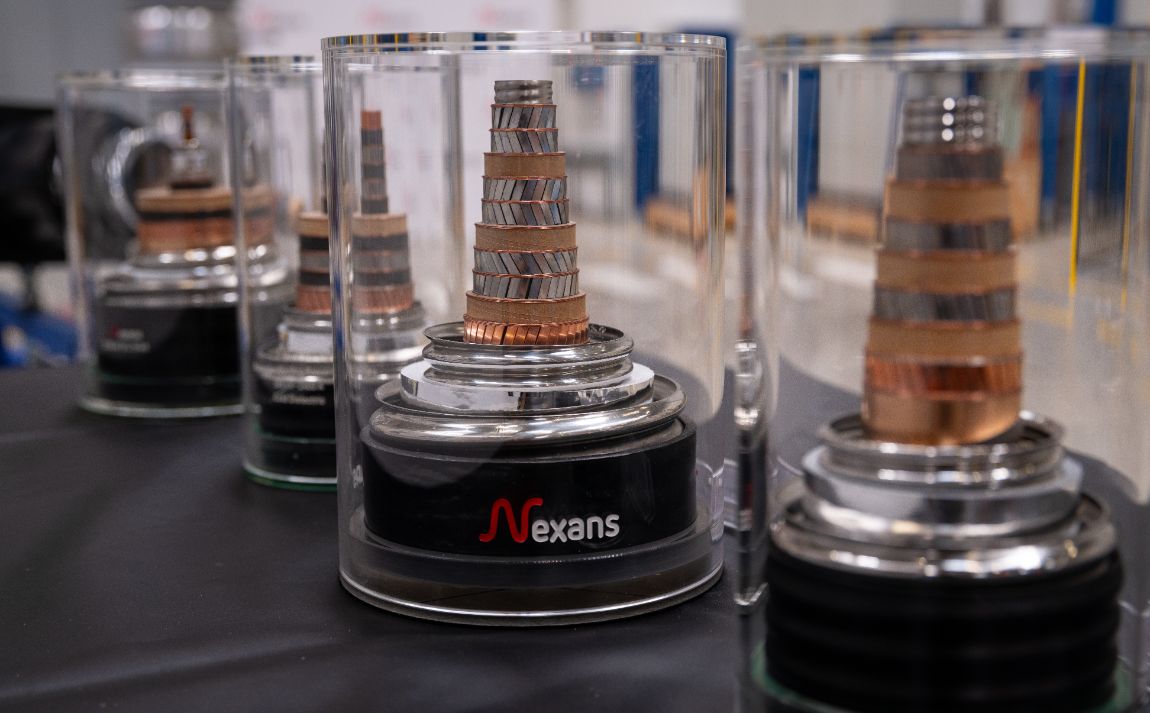
Superconductivity took centre stage at the latest CRU Wire & Cable Conference, confirming its growing role as a key enabler of next-generation energy infrastructure. The technology and its numerous applications were featured throughout the whole conference.
As a leading player in the field, Nexans contributed to several high-profile discussions and presentations throughout the conference, sharing its expertise on scaling High-Temperature Superconducting (HTS) technologies for real-world applications. The Group's commitment to advancing superconductivity was further highlighted through its involvement in the SupraMarine project, showcasing the expanding potential of HTS beyond traditional grid applications.
Main highlights
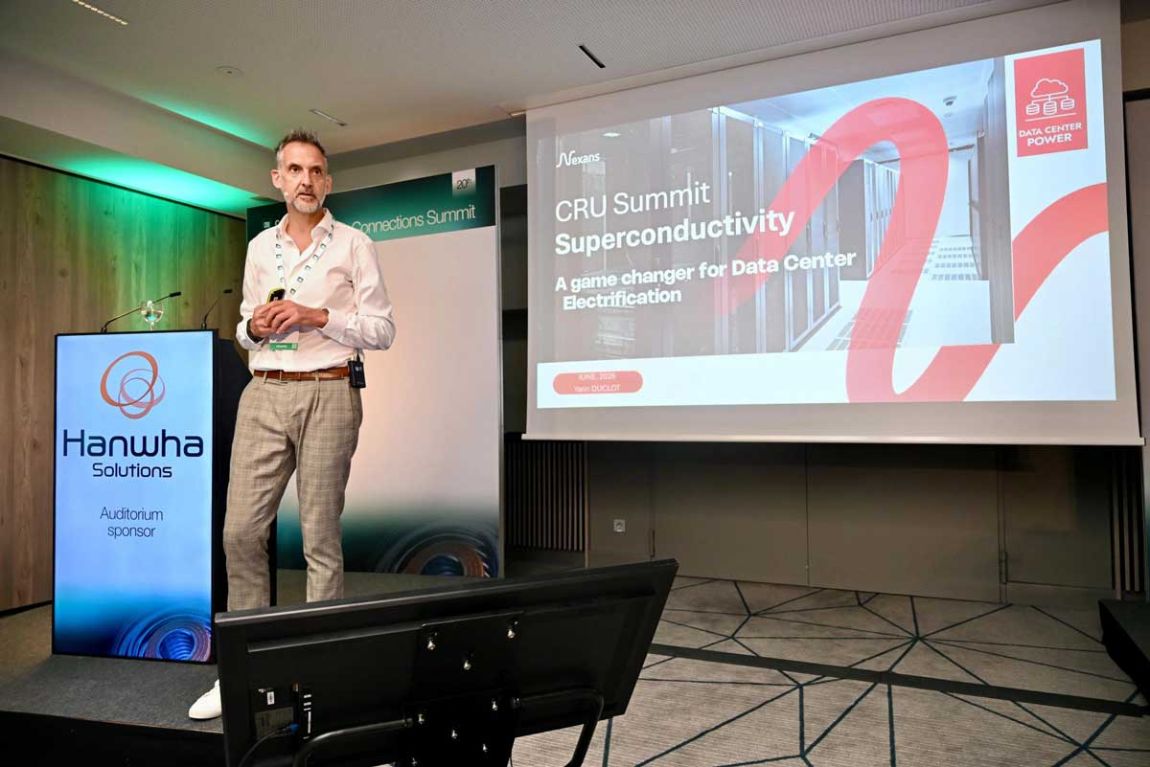
1. Transforming energy & data centre infrastructures - Yann Duclot, Nexans Acceleration Units Director
2. Scaling HTS for grid applications - Panel Discussion - Nexans and other industry players
3. Expanding applications: the SupraMarine initiative
1. Transforming energy & data centre infrastructure
The rapid acceleration of AI, cloud computing and high-performance workloads is reshaping the global energy landscape. Hyperscale and gigawatt-scale data centres are becoming critical infrastructure — but also extremely demanding in terms of power reaching now multi-hundred MW to GW scale.
Increasing power density is creating heat, efficiency and sustainability challenges. Grid constraints are forcing operators to rethink electrical architectures to ensure more power can be transmitted over long distance whilst minimizing energy losses and heat. These changes entail safety and interoperability risks, and require thorough testing and certifications.
Bottomline: from substations to data halls, electrical distribution is becoming more complex, costly, and difficult to scale.
Why conventional cables are reaching their limits
Conventional cable systems are no longer sufficient to support these evolutions:
- Massive infrastructure are required to ensure electrical distribution across the entire area (up to tens of kilometres of cabling per campus).
- Civil works, installation and maintenance drive significant costs and delays.
- Conventional resistive cables generate energy losses and heat, increasing OPEX and CO₂ emissions.
- Space constraints and safety considerations further limit scalability.
As a result, conventional cable systems struggle to meet the combined requirements of performance, efficiency and sustainability.
Superconductivity as the power backbone for next-generation of sustainable high-performance data centres
High-Temperature Superconducting cables offer a step change in performance, as they enable:
- ten times more power transmission capacity;
- ten times reduction in space requirements;
- zero energy loss and no electromagnetic emissions (EMF).
Which make them particularly suited to support data centre applications requiring high power density in condensed environment.
More information on superconducting solutions:
From innovation to industrial and commercial reality
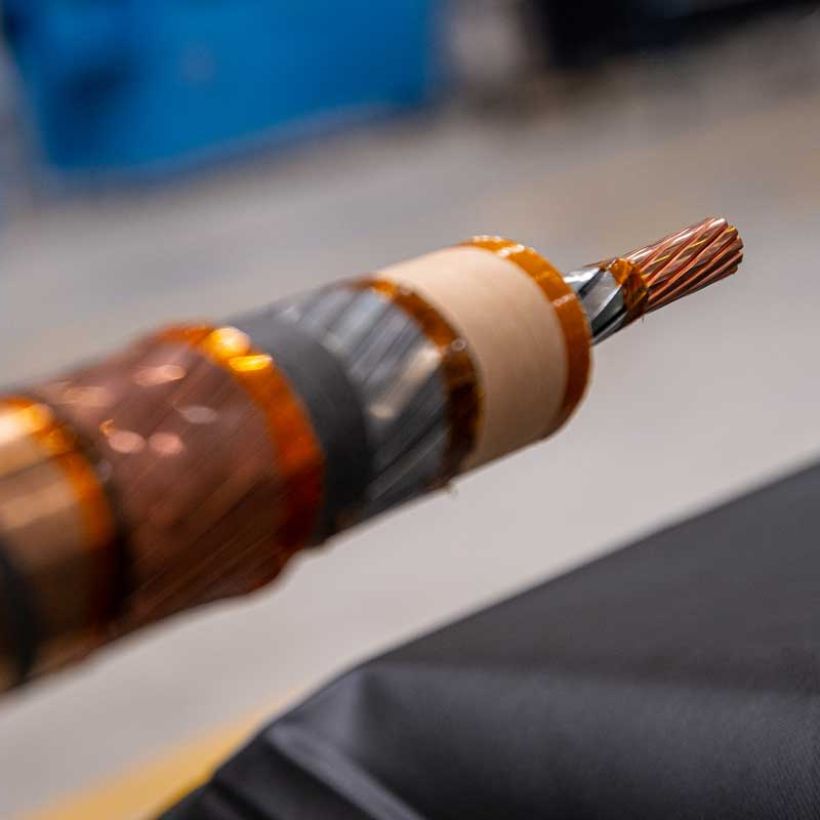
Thanks to its longstanding expertise Nexans demonstrated that superconductivity is no longer a concept — but a proven commercial reality backed by:
- industrialised HTS cable systems available from low, medium to high voltage in Alternative Current (AC) and Direct Current (DC) (from 480V AC to 275 kV AC and up to 320 kV DC);
- turnkey system from the liquid Nitrogen Cooling Plant to the High-temperature superconducting cables and accessories;
- existing projects already validating performance in real conditions.
At the same time, the ecosystem is accelerating. Nexans is actively contributing to standardisation and certification programmes, in collaboration with major industry players, to support safe and scalable deployment worldwide.
2. Scaling HTS for grid applications
A dedicated panel on “Applications, Scalability and Challenges for HTS Mainstream Grid Connections” gathered key industry leaders to discuss the path towards large-scale adoption. The discussion was chaired by Simon Price, Director, Energy Transition at CRU, and featured Yann Duclot, Nexans Acceleration Units Director as well as other key players of the industry: Tim Heidel from VEIR; Rob O'Connor from SuperNode Ltd; Tommaso Botto from ASG Superconductors S.p.A. and Jay Vitha from MetOx International.

The panel explored the potential for HTS to move from innovation to broader deployment in mainstream grid connections, while also addressing the practical challenges around scalability, application fit, and technology readiness.
Key takeaways included:
- The rapid growth of AI-driven infrastructure is creating unprecedented electricity demand.
- Superconductivity can complement existing grid infrastructure and help overcome capacity constraints.
- The next challenge is no longer technological feasibility, but scaling deployment and accelerating adoption.
- Standardisation and certification are essential to building market confidence and enabling widespread implementation.
This final point strongly resonates with Nexans' ongoing efforts to help establish industry standards for superconducting cable systems. In the field of Low-Voltage HTS cables specifically, Nexans is collaborating with UL Solutions and leading industry stakeholders—including Microsoft, AMSC, Veir and LS Cable—to define certification frameworks and technical standards for complete superconducting cable systems.
These initiatives aim to support the safe, reliable and large-scale deployment of superconducting technologies, paving the way for their broader adoption in future energy infrastructure.
More about superconducting solutions:
3. Expanding applications: the SupraMarine initiative
Whilst data centres are among the most promising applications for superconductivity, this technology also opens up new possibilities for renewable energy infrastructure.
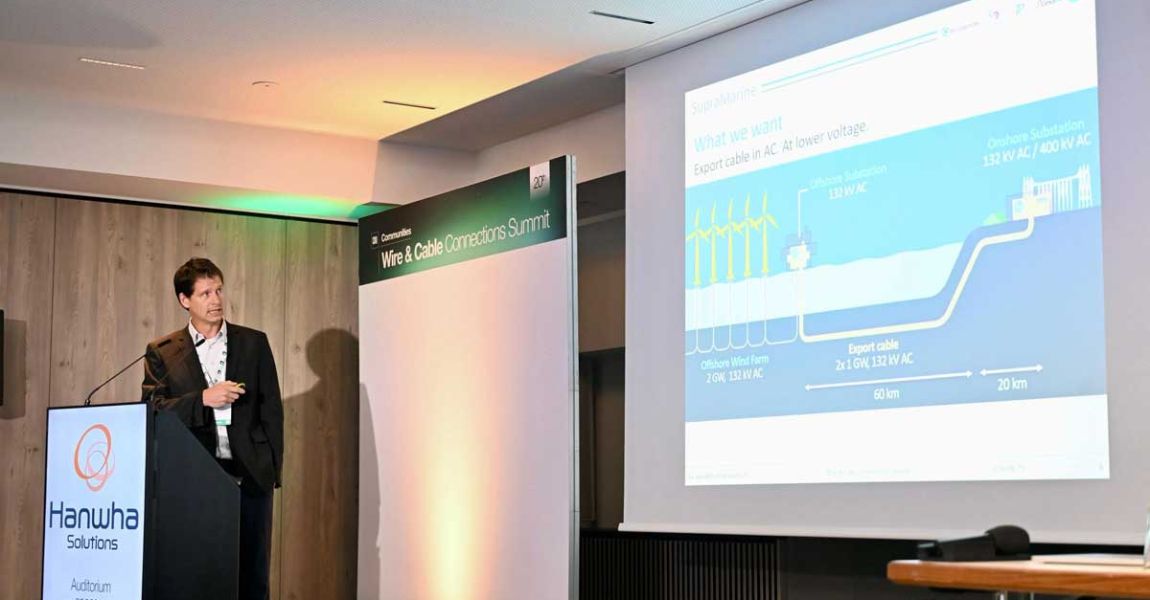
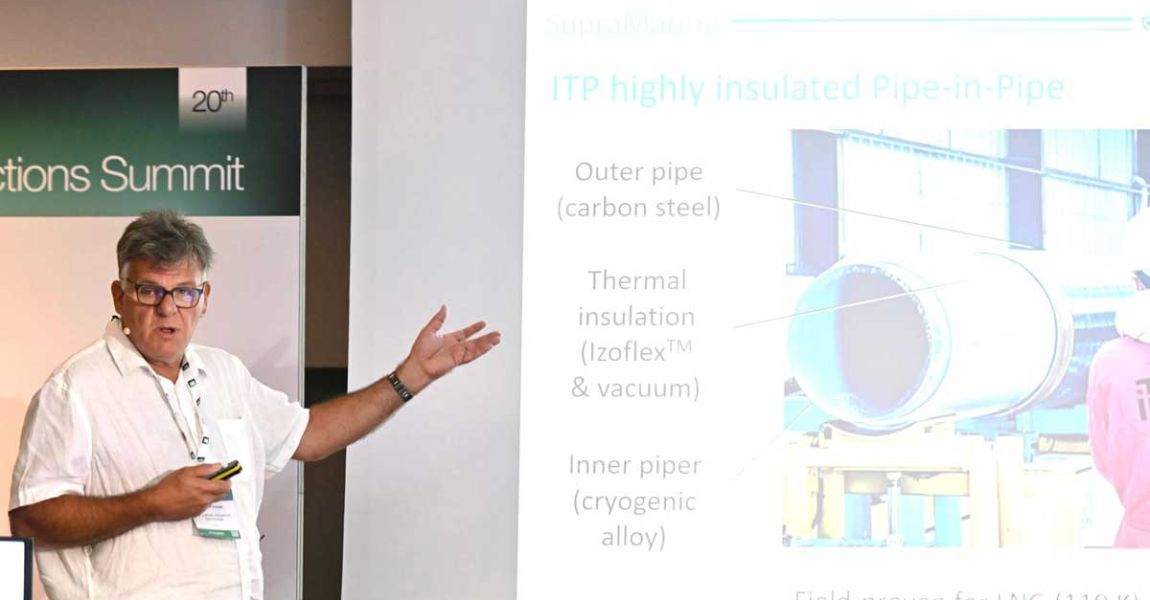
The SupraMarine project — a consortium involving Nexans and leading industrial and academic partners (Air Liquide, ITP, RTE, CentralSupélec) — is exploring the use of HTS cables to connect remote offshore renewable energy.
Two members of the consortium, Loïc Quéval, Professor at CentraleSupélec and Pierre Crespi, Innovation & Foresight Advisor from Air Liquide, presented how high-temperature superconducting cables could help connect remote offshore wind generation more efficiently, particularly in situations where conventional solutions face limits around size, cost, supply bottlenecks, and infrastructure constraints. By combining a superconducting cable core, highly insulated pipe-in-pipe technology, and industrial cryogenic cooling, the SupraMarine project offers a different route for offshore power transmission.
related news
A clear turning point for the industry
These dedicated sessions on superconductivity confirmed more than technological progress — they marked a strategic inflection point. Superconductivity is now a powerful, practical lever to accelerate the energy transition and future‑proof critical infrastructures, from grids to data centres.
Superconductivity is no longer a future promise. It is now a practical, scalable, proven industrial and commercial solution to accelerate the energy transition and future‑proof critical infrastructures, from grids to data centres.
As energy demand continues to surge, the question is no longer if superconductivity will be adopted — but how fast it will scale.
More about superconducting solutions:
Our websites
Select your country to find our products and solutions
-
Africa
- Africa
- Ghana
- Ivory Coast
- Morocco
- North West Africa
- Americas
- Asia
- Europe
- Oceania